Online Banking vs Traditional Banking: Which Is Better for You?
Banking has changed significantly over the years. In the past, people had to visit bank branches to deposit money, withdraw cash, transfer funds, and manage their accounts. Today, online banking allows customers to complete many financial transactions using smartphones, computers, and internet connections.
Both online banking and traditional banking offer useful financial services, but they have different features, benefits, and limitations. Understanding these differences can help you choose the banking method that best fits your lifestyle.
In this article, we will compare online banking and traditional banking, explore their advantages and disadvantages, and help you decide which option is right for you.
1. What Is Online Banking?
Online banking allows customers to manage their bank accounts through websites or mobile applications without visiting a physical bank branch.
With online banking, you can perform many financial activities from almost anywhere with an internet connection.
Common online banking services include:
- Checking account balances.
- Transferring money between accounts.
- Paying electricity and utility bills.
- Viewing transaction history.
- Sending money to other people.
- Managing debit and credit cards.
Online banking is especially useful for people who prefer convenient and quick financial services.
2. What Is Traditional Banking?
Traditional banking refers to banking services provided through physical bank branches. Customers visit a branch and interact with bank employees to complete financial transactions.
Traditional banking is still important because some financial services require personal assistance or physical documentation.
Common traditional banking services include:
- Depositing and withdrawing cash.
- Opening bank accounts.
- Applying for loans.
- Requesting financial documents.
- Resolving account-related problems.
- Receiving face-to-face financial assistance.
Traditional banking can be helpful for customers who prefer personal interaction and direct support.
3. Advantages of Online Banking
Online banking offers several benefits that make managing money easier.
Convenience: You can access your bank account from home, work, or while traveling without visiting a branch.
Time Saving: Online transactions can reduce the time spent waiting in queues.
24/7 Access: Many online banking services are available around the clock, although some transactions may have processing limits or scheduled maintenance.
Easy Expense Tracking: Customers can review transaction histories and monitor their spending through banking applications.
Lower Banking Costs: Some online banks offer lower fees because they have fewer physical branches and lower operating expenses.
4. Disadvantages of Online Banking
Despite its advantages, online banking also has some limitations.
- Requires a reliable internet connection.
- Technical problems may temporarily interrupt services.
- Customers may face cybersecurity risks such as phishing and online fraud.
- Some services require branch visits or additional verification.
- People with limited digital skills may find online banking difficult.
Always use strong passwords, enable two-factor authentication when available, and avoid accessing your bank account through suspicious links.
5. Advantages of Traditional Banking
Traditional banking provides personal services that many customers still appreciate.
Personal Assistance: Customers can speak directly with bank employees and receive help with financial matters.
Better Support for Complex Transactions: Certain services, such as specialized loan applications and document verification, may be easier to handle in person.
Cash Services: Physical branches allow customers to deposit and withdraw cash directly.
Personal Relationships: Regular interaction with bank staff can help customers understand available financial products and services.
6. Disadvantages of Traditional Banking
Traditional banking also has some disadvantages.
- Customers may need to travel to a branch.
- Long queues can waste time.
- Branches operate during specific business hours.
- Some services require paperwork.
- Certain banking services may involve additional fees.
These limitations can make traditional banking less convenient for people with busy schedules.
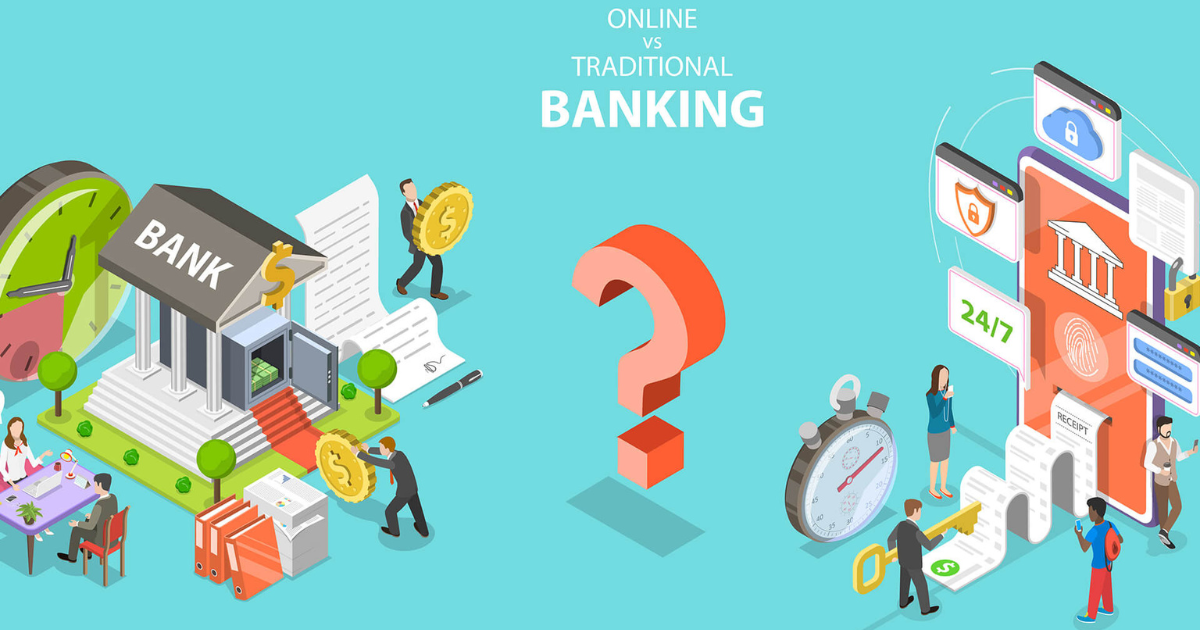
7. Online Banking vs Traditional Banking: Key Differences
| Feature | Online Banking | Traditional Banking |
|---|---|---|
| Accessibility | Internet-based | Physical branches |
| Operating hours | Many services available 24/7 | Fixed business hours |
| Transactions | Digital | In-person or supported digital services |
| Customer support | Chat, phone, or email | Face-to-face assistance |
| Cash deposits | Depends on available services | Available at branches |
| Convenience | High | Requires branch visits |
8. Which Banking Option Should You Choose?
The best option depends on your financial needs and personal preferences.
If you want quick payments, easy transfers, and convenient account management, online banking may be the better choice.
If you prefer personal assistance, handle frequent cash transactions, or need help with complex financial services, traditional banking may be more suitable.
You do not necessarily have to choose only one. Many customers use online banking for everyday transactions while visiting physical branches when they need additional support.
Conclusion
Online banking and traditional banking both play important roles in modern financial management. Online banking offers convenience, flexibility, and time-saving services, while traditional banking provides personal assistance and access to physical financial services.
The right choice depends on your lifestyle, financial requirements, and comfort with technology. By understanding the benefits and limitations of both options, you can make smarter banking decisions and manage your money more effectively.